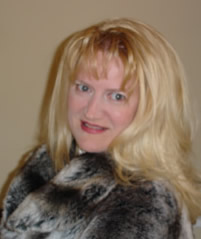
Morgan Ashbury and her Wednesday's Words
 I thought Morgan's Wednesday's Words fit nicely into my personal "Set goals for yourself" theme of January. :)
You Gotta Have Goals!! :)
L
I encountered a term just the other day that I must confess left me feeling very confused. That term: "three chapter writers".
Now when I saw this I thought, "hmm, I wonder what chapter these three writers belong to"? But no, it wasn't three `chapter writers'. It was `three chapter' writers. That is, writers who have never written any more than three chapters of any novel.
I'm trying to understand this concept. I really am. I know that there are copious contests for partial manuscripts—even for best first paragraphs—and that the purpose of these contests is to encourage writers to complete their books. That much I get. But you know, one could conceivably go a long time winning writing contests and prizes and never finishing a single manuscript.
"Morgan," some of you are probably thinking about now, "that sounds snarky." You'd be right. "Morgan," still others of you are probably thinking, "you know that writing is difficult. It's artistic and complicated and hard." Yes, you're right too.
One time a few years back when I was watching The News Hour on PBS, Mr. Lehrer was interviewing an author about his first book. We're talking upper case L here, for Literature. It had taken the man 10 years to write it. 10 years. To write ONE book. I'm not making this up.
Some may think this is a reasonable amount of time, because writing is after all an artistic endeavour.
To put the concept of `three chapter writers' into perspective, let me suggest the following comparisons (and here is where I'm going to get into trouble).
Imagine going to the doctor and asking him about the pain in your leg, and hearing, "Sorry, Mr. Jones. But I never got beyond the abdomen in medical school. Becoming a doctor is hard, you know. But hey, look at all my awards for Best First Semester!" Imagine having a plumber come to your house to unstop a drain. In the midst of the work, a pipe bursts, flooding your home. "Oh, sorry Mrs. Jones," says he. "I'm really good at drains. But this whole pipe thing...I just don't get it. Not really my milieu, you understand."
Maybe the problem is that I'm simply old fashioned. If you want to get something done...just do it. Writing is, after all, just one damned sentence after another. If you who are reading these words right now are among those who have never completed a manuscript, I know I am coming off insensitive (again). I don't mean to hurt your feelings. But can't you just finish the damn book?
If you call yourself a writer, then isn't it your job to write? Stories have beginnings, middles, and ends. Just do it! If you can't, then hey, on second thought, the problem may not be yours. You may be the victim of advertising.
There is an entire industry built around the unrequited novel. There are interactive communities on line that offer writing challenges and resources. They feature `tips' from published authors. Golly, I hope no one ever asks me to contribute any tips. You can imagine what I'll say: just write the darn thing! Some of these sites offer "incentives" to prod the writer along, to coax the author into being an author. I believe in incentives. I particularly like the one I use myself: the pride of accomplishment.
Some of these sites feature guest essays, too, by accomplished published authors, giving advice on how to finish a manuscript. Can you imagine me as a guess essayist? "Okay, sit down at your computer. Open a new word document. Place your fingers upon the key board. Now, one word at a time, begin to write. Keep writing until you are finished!"
Is there any other area in the arts that celebrates uncompleted tasks? Is there like, a bakers `Half-Baked Hall of Fame'? Baking is, of course, one of the finest culinary arts.
Is there an Art Gallery somewhere on the globe that celebrates the begun-but-never-
How about the musical score that is only half composed, the landscaped garden only half planted, and the motion picture that is only partly filmed?
So why do we so openly and so often celebrate the incomplete story?
Writing is hard work, no question about it. The author begins with a blank page, and must paint in words a picture so complete, must take the reader on a journey so fulfilling, that the reader will feel as if the completion of it was their own achievement.
Hard work, yes. Artistic, yes. But only alive and breathing and in possession of a soul, when it is complete, when it is whole.
Love,
Morgan
COMING FEBRUARY 25TH
MAGIC AND LOVE 3:
A PRINCE FOR SOPHIE
Only from SIREN PUBLISHING
http://www.sirenpub
Labels: goals, Wednesday's Words
posted by Lara Santiago @ 10:35 AM
0
comments